Biomass Gasification Polygeneration - Biomass gas fuel
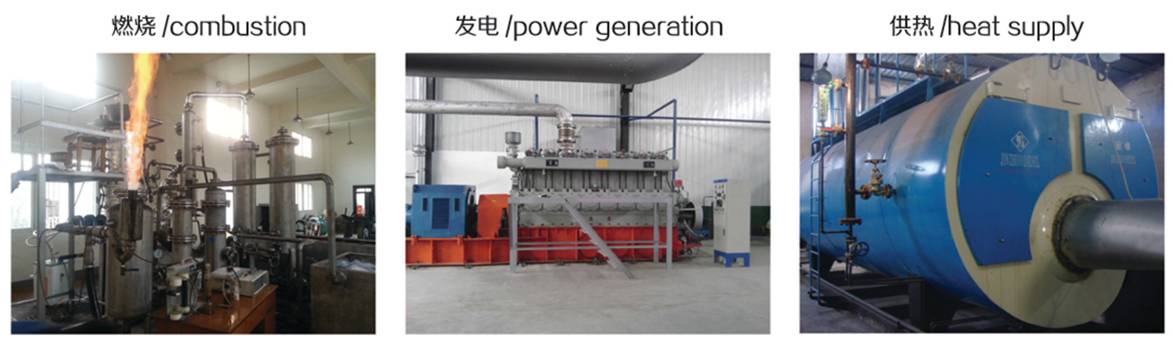
Biomass gasification is a process that takes rice husks, wood chips and other biomasses as the raw materials, that takes air (oxygen, or oxygen-enriched gas, etc.), water steam, and other gases as the gasification agent, and that converts some combustible substances in the biomass into the combustible gas through the thermal chemical reaction at the high temperature. Major combustible components of the combustible gas produced by biomass gasification include CO, H2, CH4as well as a small amount of CnHm(n>1). The biomass gasification converts the low-quality solid biomass into the high-quality combustible gas to be widely applicable in different fields of industrial and agricultural production, like power generation, gas supply, heat supply, dimethyl ether synthesis, and so on.
(1) Basic properties of Biomass Gas
Combustible gas components of biomass gas: methane, carbon monoxide, and hydrogen. Incombustible components: nitrogen, carbon dioxide, and a small amount of oxygen, etc.
(2) Application of biomass gas: power generation, heat supply, gas supply.